|
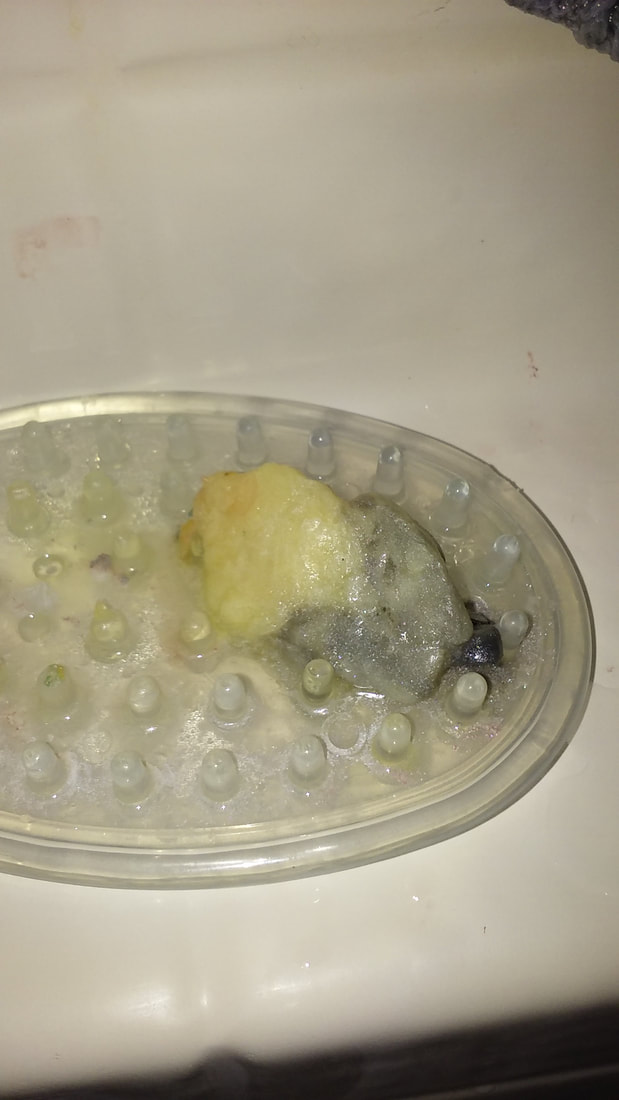
One of the main questions asked by customers is: Will your soap get all soft and goopy? This is usually followed by "I purchased some handmade soap at my local farmers market and it smelled wonderful, but it turned into a puddle of goo after a few days of sitting in my shower stall. I would really like some soap that doesn't do this!" Alas, this is a very difficult thing to achieve without including some unethical ingredients or removing some beneficial glycerin. Stearin is a vegetable derived hardening agent that some soap makers employ. Stearin can be derived from palm oil, so it doesn't happen here. Salt can sometimes help soap with firmness, and it sometimes happens here. Sodium lactate allegedly has bar hardening properties, and it sometimes happens here. The main culprit in the goop effect is glycerin. When soap is made by hand, the glycerin molecules get to remain in between the sodium salt molecules in the bar. Glycerin is aso known as glycerol, and it is the natural result of the "alkaline hydrolysis of esters" which is what saponification does. Most soap makers consider glycerin to be a very beneficial ingredient and they do not separate it from the salts formed during the process. It helps draw moisture to the skin. Glycerin and any free unsaponified fatty acids are the main culprits in the goop factor of handmade soap. They are also key components for skin benefit that commercial soaps do not usually retain in significant amounts. Another element of the goop factor is the age of the soap. A year old bar of soap is harder than a 2 month old bar of soap. The only draw back to aged soap is that any plant material in it will have most likely faded to brown, and some essential oil scents may have departed. As far as hardness goes-the older, the better! There are definitely some techniques that will help to control the goop factor while the soap is in use. It is better to have a soap dish away from the shower stall to put your soap in between uses. It is good to alternate bars of soap so that they get a chance to dry between uses. If you have a big hunk of handmade soap, you can cut it into smaller pieces and alternate between these. Around here, we are generally brutal to soap during batch testing, and the goop factor really comes on after 1 bath and 2 showers in a row every day with no dry respite. (I always forget to take my test soap out before somebody else needs the shower, and usually they use the soap that I am testing!) Here is a link to the description of what exactly happens during saponification and the molecules involved: amrita.olabs.edu.in/?sub=73&brch=3&sim=119&cnt=1
0 Comments
Leave a Reply. |
|
 RSS Feed